
TL;DR
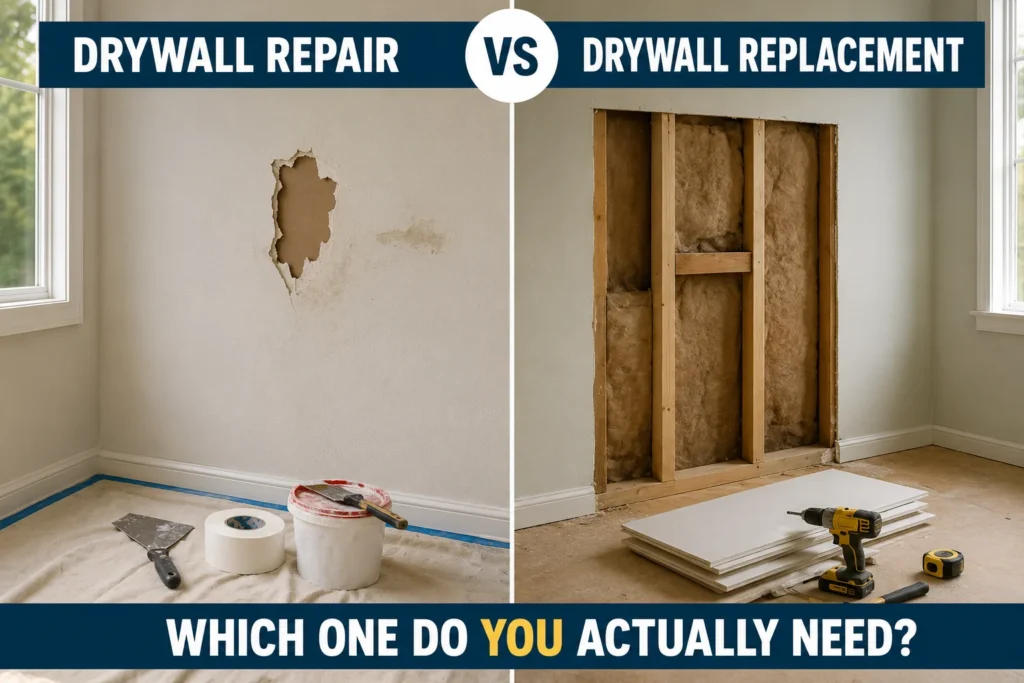
Repair your drywall when the damage is small, dry, and in one spot: holes under about 12 inches, hairline cracks, dents, or a single water stain from a leak that’s already fixed. That runs $150 to $600 for most jobs. Replace it when the board is soft, sagging, moldy, water-damaged across a wide area, or covered in old mismatched patches. Replacement runs $2 to $6 per square foot. The simple rule: if a repair would cost more than about half of replacing the section, replace it.
Something’s wrong with your wall and now you’re stuck on one question: do I patch it, or do I tear it out?
It matters, because the wrong call costs you money either way. Patch a wall that’s rotting behind the surface and the problem comes right back. Rip out a wall that just needed a $200 patch and you’ve paid five times what you had to.
Here’s how we make that call, and it’s the same checklist we run on every job. Repair when the damage is small, dry, and cosmetic. Replace when the board is compromised, wet, or failing across a big area. Most of what we see just needs a repair. But not all of it, and below is how to tell the difference.
We’re Handyman Services Near Me, based in Forest Park, and we do both, so we’ve got no reason to talk you into the bigger job. We’ll tell you what your wall actually needs.
Key Highlights
Repair if: the damage is a small hole (under ~12″), a hairline crack, a dent, or a single dry stain, and the wall is otherwise solid. Cost: $150–$600.
Replace if: the drywall is soft or sagging, has mold, took on water across a wide area, or has too many old patches to blend. Cost: $2–$6 per square foot.
The money rule: if repairing would cost more than 40–50% of replacing that section, replacement is the smarter buy.
Never patch over water or mold without fixing the source first. It always comes back, and it comes back worse.
Repair or Replace? The Quick Answer
Here’s the fastest way to tell which side of the line you’re on:
| Sign | Repair | Replace |
|---|---|---|
| Small hole, dent, or crack | ✅ | |
| Damage in one spot, wall is solid | ✅ | |
| Single dry stain (leak already fixed) | ✅ | |
| Board feels soft or spongy | ✅ | |
| Ceiling or wall is sagging | ✅ | |
| Mold or musty smell | ✅ | |
| Water damage across a big area | ✅ | |
| Wall covered in old, mismatched patches | ✅ | |
| Cracks that keep coming back | ✅ |
If everything you’ve got lands in the left column, you need a repair. Even one item in the right column means it’s worth having someone look before you patch.
Where This Data Comes From
We base these ranges on our own Forest Park jobs plus published data from Angi, HomeGuide, and Angi’s drywall installation report. These platforms track thousands of real jobs, so they give an honest baseline to price against. Your exact number depends on the damage and what’s behind the wall.
When Repair Is the Right Call
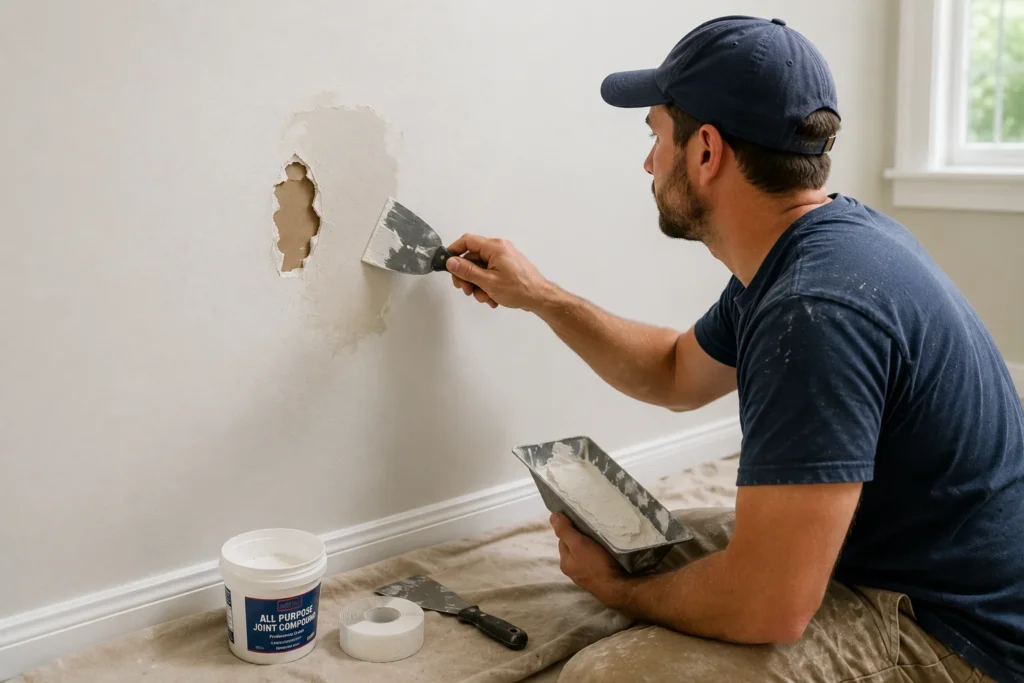
Most drywall damage is cosmetic, and cosmetic damage is a repair. This is the cheaper, faster fix, and it’s the one we recommend whenever the wall itself is still sound.
Repair makes sense for:
- Doorknob holes, nail pops, and small dents
- Hairline and small cracks that aren’t spreading
- A single water stain, once the leak above it is fixed
- Damage in one spot on an otherwise solid wall
A patch, some tape, two or three coats of compound, sanding, primer, and matching paint, and it disappears. That’s our Drywall Repair Service in Forest Park, IL. If it’s just a hole, we handle that specifically as Drywall Hole Repair, usually in a single visit.
The part people get wrong here is texture and paint matching. A bad patch is obvious because the finish doesn’t blend. That’s the skill you’re really paying for.
When Replacement Is the Right Call
Sometimes patching is throwing good money after bad. Replace the drywall when:
- The board feels soft or spongy to the touch (that’s water inside it)
- A ceiling or wall is sagging or bulging
- There’s mold or a musty smell behind the wall
- Water hit a wide area, not just one spot
- The wall has so many old patches it can’t be blended anymore
- Cracks keep returning in the same place, or doors and windows nearby stick (that’s movement, not just drywall)
In these cases, the damaged section gets cut out, hauled away, and new board goes in, taped, mudded, sanded, and finished. That’s drywall installation, and we handle it for homeowners across the area through our Oak Park drywall installation, River Forest drywall installation, and Chicago drywall installation pages.
One hard rule: if there’s mold or active water, we fix the source first. Patching or replacing over a live leak just guarantees a callback.
Repair vs Replacement Cost
Here’s the money side, laid out plainly:
| Option | Typical Cost | Best For |
|---|---|---|
| Small hole / patch repair | $150 – $400 | One or two spots, dry wall |
| Larger repair | $400 – $1,000 | Bigger holes, some blending |
| Full section replacement | $2 – $6 per sq ft | Soft, moldy, or widespread damage |
| Standard 8′ x 12′ wall replaced | $200 – $600 | Whole panel gone bad |
| A 500 sq ft room replaced | $2,700 – $3,300 | Major water or structural damage |
The rule of thumb ties it together: if the repair would cost more than about 40 to 50% of replacing that section, replace it. You get a cleaner result and you’re not paying twice.
Pro Tip: When a section has to come out anyway, that open wall is your one cheap chance to check what’s behind it: pipes, wiring, insulation, or a leak you didn’t know about. Fix those while the wall’s open. Doing it later means tearing the same wall out a second time.
A Note for Older Forest Park Homes
A lot of homes around Forest Park and the near-west suburbs are older, and some still have plaster walls or textured ceilings from decades back. Two things to know:
Replacing drywall in older homes can trigger lead or asbestos testing, which runs $600 to $1,500, especially with pre-1980 textured or popcorn ceilings. If you’re dealing with an old textured ceiling, that’s often its own job, which we handle as Popcorn Ceiling Removal.
And once the drywall’s repaired or replaced, it needs to be primed and painted to match. We roll that into the job with our Interior Painting Service so you’re not left with a bare patch on the wall.
Not sure which bucket your wall falls into? Our General Home Repair team can take a look and tell you straight.
Frequently Asked Questions
How do I know if I should repair or replace my drywall?
Repair if the damage is small, dry, and in one spot, like a hole under 12 inches, a hairline crack, or a dent. Replace if the board is soft, sagging, moldy, water-damaged over a wide area, or covered in old patches. If a repair would cost more than about half of replacement, replace it.
Is it cheaper to repair or replace drywall?
Repair is almost always cheaper for isolated damage, running $150 to $600. Replacement costs $2 to $6 per square foot. But repeated patching on a bad wall ends up costing more than one replacement, so cheaper up front isn’t always cheaper long-term.
Can water-damaged drywall be repaired, or does it need replacing?
A single dry stain from a leak that’s already fixed can be repaired. But if the board is soft, swollen, or shows mold, it needs replacing. Water-damaged drywall traps moisture and grows mold behind the surface, so painting over it doesn’t solve anything.
How much does it cost to replace a section of drywall?
Full replacement runs $2 to $6 per square foot including removal, new board, and finishing. A standard 8′ x 12′ wall runs about $200 to $600, and a full 500 square foot room lands around $2,700 to $3,300.
Why do my drywall cracks keep coming back after I patch them?
Recurring cracks in the same spot usually mean movement, not bad patching. That can be house settling or a structural issue, especially if nearby doors or windows stick. In that case the cause has to be addressed first, then the drywall replaced, or it’ll just crack again.
Not sure whether to patch it or replace it?
Call Near Me Handyman Services for a free, honest look. We’ll tell you what your wall actually needs, not what makes us the most money.